Why Streets Aren’t Stages for Softball or Protest
A few years ago, I watched a situation unfold that has stuck with me because it exposes something we rarely talk about honestly: we don’t always enforce the rules the same way for everyone.
Picture a group of young people who decide a busy street is the perfect place to play a quick game of softball. In their minds, it’s harmless. It’s fun. It’s spontaneous. They’re not trying to hurt anyone.
But the street isn’t theirs.
Within minutes, traffic backs up. Tempers rise. People miss appointments. A few don’t make it to work. And somewhere in the line, an ambulance is delayed, not because of weather or an accident, but because a group of people decided their activity mattered more than the public use of a road.
A driver finally gets out and says what most people are thinking: “There’s a park two blocks away. Take the game there.”
Another adds the obvious: “These roads exist for everyone. Taxpayers pay for them. You don’t get to claim them for your own purposes.”
The police arrive. They don’t debate the kids’ motives. They don’t ask what the game represents. They don’t negotiate over how long they should be allowed to play. They simply do what police are expected to do in a functional society: they clear the road.
Not because softball is evil, but because blocking a public road is unacceptable when it interferes with other people’s lives.
Now let’s pivot to what we’ve seen repeatedly in recent years.
We’ve watched protesters block highways and major intersections. Traffic stops. People miss work. Families sit in cars for hours. And yes, emergency vehicles can be delayed. That isn’t theory. It’s reality when roads are physically obstructed.
And this is where the comparison matters.
The issue isn’t whether a cause is noble. The issue is the method. If the method prevents innocent people from moving freely, doing their jobs, getting to their kids, or receiving emergency care, then the method has crossed a line. Roads are not private stages. They are shared arteries. When you block them, you aren’t only “making a statement.” You’re seizing public space and forcing others to pay the price.
That brings us to an uncomfortable question.
If the same behavior would get a softball team removed in minutes, why is it sometimes tolerated when the group is protesting?
Some will answer, “Because protest is a constitutional right.” And it is. Peaceful assembly matters. Protest has played a historic role in correcting injustice. But the Constitution does not grant anyone the right to physically restrict other people’s freedom of movement or prevent emergency response. Rights collide in the real world, and one person’s expression cannot cancel another person’s basic safety.
This is why selective enforcement is dangerous.
When law becomes optional for some but rigid for others, the public stops believing in fairness. And when fairness dies, trust dies with it. You don’t have a society held together by shared standards. You have a society held together by power, by noise, by intimidation, and by whoever can cause the biggest disruption.
That’s a path we shouldn’t accept, no matter what “side” we’re on.
So what’s the solution?
One reasonable approach is to create more legitimate “places to protest” that don’t require shutting down the infrastructure that keeps a city alive. Many communities already do this in practice: permitting marches, using planned routes, gathering at civic plazas, capitol steps, city halls, and public parks. The idea isn’t to silence anyone. The idea is to protect protest and protect the public.
Think of it like this: the kids didn’t lose their right to play softball. They just had to do it in the right place.
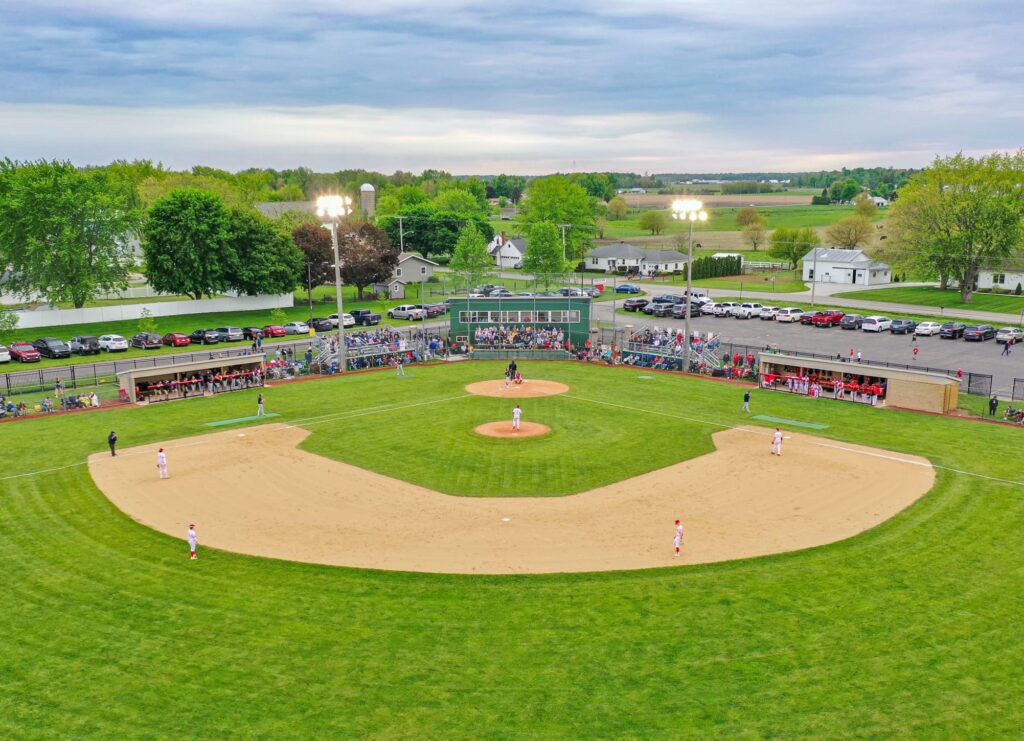
One practical idea is to treat protests the way we treat other public activities: give them a proper venue. Just as cities build ballparks so kids can play without shutting down traffic, cities could designate well-known “protest parks” or civic demonstration spaces—near city halls, capitols, or major public squares—designed for visibility without immobilizing the arteries of a city. These spaces could include clear signage, permitted sound zones, accessible entrances, and even a simple permit process that makes it easy to gather lawfully and safely. And when a protest needs to move, the answer shouldn’t be “block whatever road you want,” but “use approved routes and permits so emergency access stays open and the public knows what to expect.”
If we’re not willing to build or designate spaces like that, then we owe citizens something just as important: clear, consistent rules about where protests are allowed, how long they can occupy a space, and what actions cross the line into obstruction. Either way, the standard should be the same for everyone.
In the same way, citizens shouldn’t lose their right to protest. But protest should be organized in a way that doesn’t punish strangers who had nothing to do with the grievance, and doesn’t put lives at risk by blocking emergency response.
If a demonstration is peaceful and lawfully conducted, it deserves protection even when we disagree with the message. But if a demonstration crosses into obstruction, intimidation, or lawbreaking that harms the public, then the law should apply the same way it would apply to anyone else.
That’s not “anti-protest.”
That’s pro-society.
Because the truth is: we cannot keep a nation healthy when we treat law as a weapon against some and a suggestion for others.
If we want a future where people can speak freely and live safely, we have to defend both at the same time. The road belongs to all of us. It has to stay that way.
Similar material can be found in my book Survival in the 21st Century.
