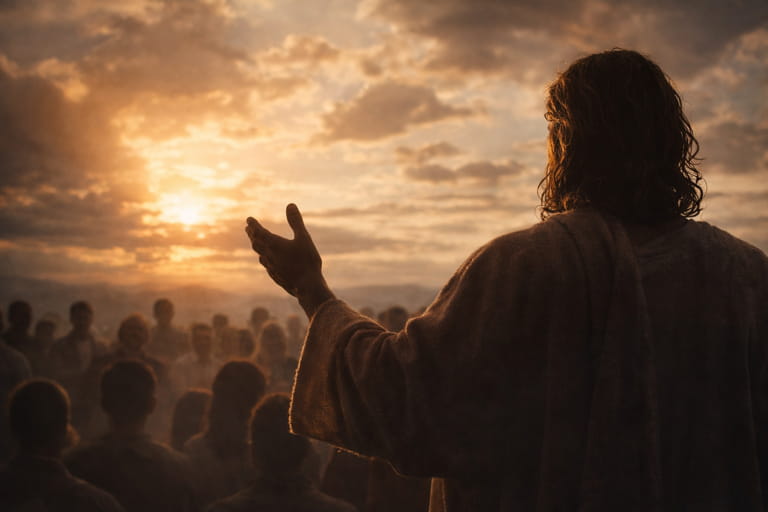
Jesus didn’t warn us about false prophets because he wanted us to be suspicious of everyone. He warned us because he understood something about human nature: when we feel afraid, uncertain, or overwhelmed, we become desperate for simple answers. And in those moments, we are most vulnerable to voices that sound confident but aren’t grounded in truth.
That’s why his words still matter. They aren’t just religious instruction. They are a survival guide for the inner life.
A false prophet isn’t only someone standing on a stage with a Bible in hand. A false prophet can be any voice that tries to take the place of your conscience, your discernment, and your relationship with God. It can be a preacher who uses fear to control. It can be a teacher who asks you to stop thinking. It can be a politician who demands loyalty instead of integrity. It can be a media personality who feeds outrage like a drug. It can even be a friend, a movement, or a crowd that tells you the measure of truth is whether people applaud.
Jesus lived in a world full of religious certainty, rigid categories, and public displays of spiritual superiority. And he challenged it constantly. He confronted hypocrisy. He exposed performance. He called out leaders who used religion as a tool to elevate themselves while burdening everyone else.
He was not shy. He was not cautious. He didn’t protect the system. He protected the people.
And that’s the part many forget. Jesus was not a defender of religious machinery. He was a restorer of spiritual clarity. He called people back to something honest and alive, something rooted in love, humility, and truth.
If we take him seriously, then we have to take discernment seriously. We have to become people who ask better questions.
Where should I place my trust?
Is what I’m hearing producing love, compassion, and humility, or is it producing fear, division, and pride?
Is this voice leading me toward God, or toward dependence on the messenger?
Is this message strengthening my character, or simply feeding my anger?
This is where critical thinking becomes spiritual discipline. It’s not a threat to faith. It’s a protection of faith. Real faith does not require the mind to shut down. Real faith invites the mind to wake up.
God gave us a mind that can analyze, ponder, and conclude. That isn’t an accident. It’s part of how we are designed. And I believe God expects us to use it, not to become cynical, but to become grounded. Not to become argumentative, but to become wise.
This also means accepting our place in the larger reality of existence. We live in a world of limitations. We don’t know everything. We cannot see the whole picture. Yet we still sense something more. We still sense meaning. We still sense the quiet pull of the Spirit within us, calling us toward goodness. That combination, humility about what we don’t know and openness to what is greater than us, is the balance that keeps a person sane in a chaotic age.
Jesus modeled that balance. He did not chase approval. He did not fear rejection. He didn’t surrender truth to fit in. And he didn’t use truth as a weapon. He used it as a light.
And that is what we need now more than ever.
Because we live in an age where messages move at the speed of light and confidence is mistaken for credibility. We are pressured to react instead of reflect. We are pushed into tribes that reward loyalty more than honesty. It is easy to “follow,” and increasingly difficult to discern.
So the question is not whether false prophets exist.
The question is whether we are willing to become the kind of person who cannot be easily deceived.
That kind of person doesn’t panic at every new claim. They listen, weigh, compare, and pray. They look at the fruit. They notice whether a message elevates the ego or expands the soul. They pay attention to whether it creates compassion or contempt. They refuse to be pulled into the addiction of outrage. They keep their spirit awake.
We may not have the strength of Jesus, but we can practice his way. We can refuse to surrender our conscience. We can refuse to let fear become our guide. We can be humble enough to learn, brave enough to question, and steady enough to hold to what is true.
That is not rebellion against faith.
That is faith with roots.
And in an age of noise, roots matter.
If you like this material, you might enjoy this book. Click on the Cover to see a greater description on Amazon.